
Security and Innovations
High-capacity cabinets: optimising storage for large stocks without compromising fire protection
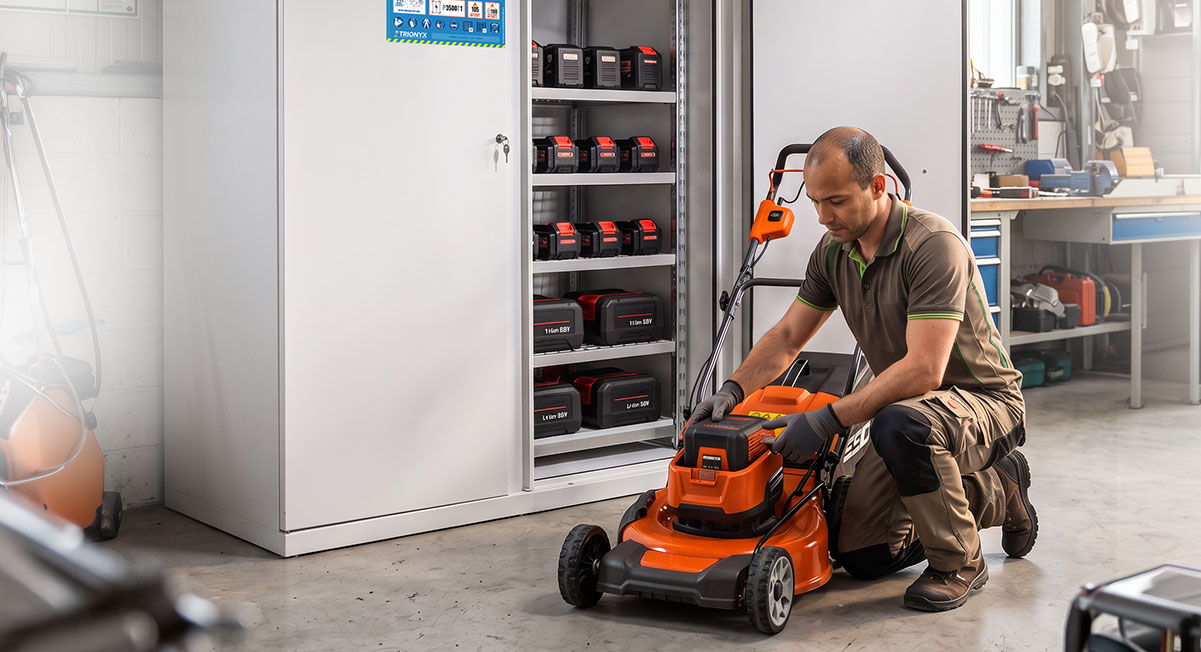
A range of safety cabinets for lithium batteries must cater for all volumes, from small local stocks to large-capacity warehouses, whilst maintaining the same high standards of protection. At Trionyx, whether it is a small, compact model or an XXL cabinet, the design principle remains the same: to control fire spread and the ejection of projectiles (cells, debris, and components propelled by rising pressure).
Which types of batteries are generally bulky?
A high-capacity cabinet can accommodate equipment whose volume, weight and stored energy exceed those of standard power tool batteries:
- Light electric vehicle batteries: electric-assist bicycles and scooters, electric mopeds and motorbikes.
- Forklift and material-handling equipment batteries: lithium packs for forklifts, pallet trucks and stackers.
- Batteries for robots and autonomous vehicles: AGVs, AMRs and warehouse logistics robots.
- Stationary storage packs: energy storage modules, inverters, backup systems.
- Batches of power tool batteries and chargers: new or in-transit packs, stored in large quantities.
How should they be stored correctly?
A few simple rules are all it takes to get the most out of a high-capacity cabinet:
- Do not pack the batteries too tightly: leave space between the packs to allow for visual inspection and intervention should a problem arise.
- Isolate any damaged batteries (deformed, swollen, or impacted) from the undamaged stock.
- Separate by family, type or batch to facilitate tracking and minimise handling errors.
- Clear the area around the cabinet: cardboard boxes, pallets and packaging must be kept at a distance.
This protection is only effective if it is based on a specific framework: Trionyx cabinets now comply with a regulation [➡️ Technical Recommendation RT362], which governs their design and level of protection. It is this framework that guarantees genuine safety, for both routine storage and high-risk batches.
Logistics management: Why use compliant solutions for high-risk or defective batches?
A defective, damaged or recalled lithium battery must be isolated immediately in a suitable and compliant storage solution. It is within logistics flows (receipt, customer returns, manufacturer recalls, disposal) that these high-risk batteries most frequently appear. A deformed casing, swelling, signs of impact or overheating are enough to render it dangerous.
4 good reasons to opt for a compliant solution? To integrate these batches into your workflows, provide a dedicated and clearly marked storage area, a quarantine procedure upon receipt, and regular rotation to the appropriate treatment channels. Separating safe batteries from high-risk ones is one of the most effective measures for ensuring warehouse safety.
Reducing the risk of fire: a damaged battery can catch fire without warning. Isolating it in a suitable cabinet protects the rest of the stock and people.
Securing transit areas before recycling: batches awaiting sorting, return or recycling sometimes remain in the warehouse for several days, and it is whilst they are waiting that they are most at risk.Meeting the requirements of insurers and audits: properly labelled and compliant equipment demonstrates that the risk is under control.Protecting your liability: in the event of a claim, compliant storage shows that you have taken the necessary measures.
Would you like to prepare for the storage of your batteries in your warehouse in the best possible way and with complete peace of mind?
>>➡️ Discover our ‘high-capacity’ solutions
Would you like advice directly from our experts?
>>➡️ Contact the TRIONYX team or by telephone on 01.46.45.80.00